
The BOM Is Not Missing. It Is Printed in a Manual Nobody Has Read.
Walk through a typical EAM and half the equipment has no bill of materials behind it. The parts are not lost. They are sitting in spare parts lists, GA drawings, and IOM manuals, waiting to be read.

Priyansh Srivastava
Co-founder & CEO, Raven
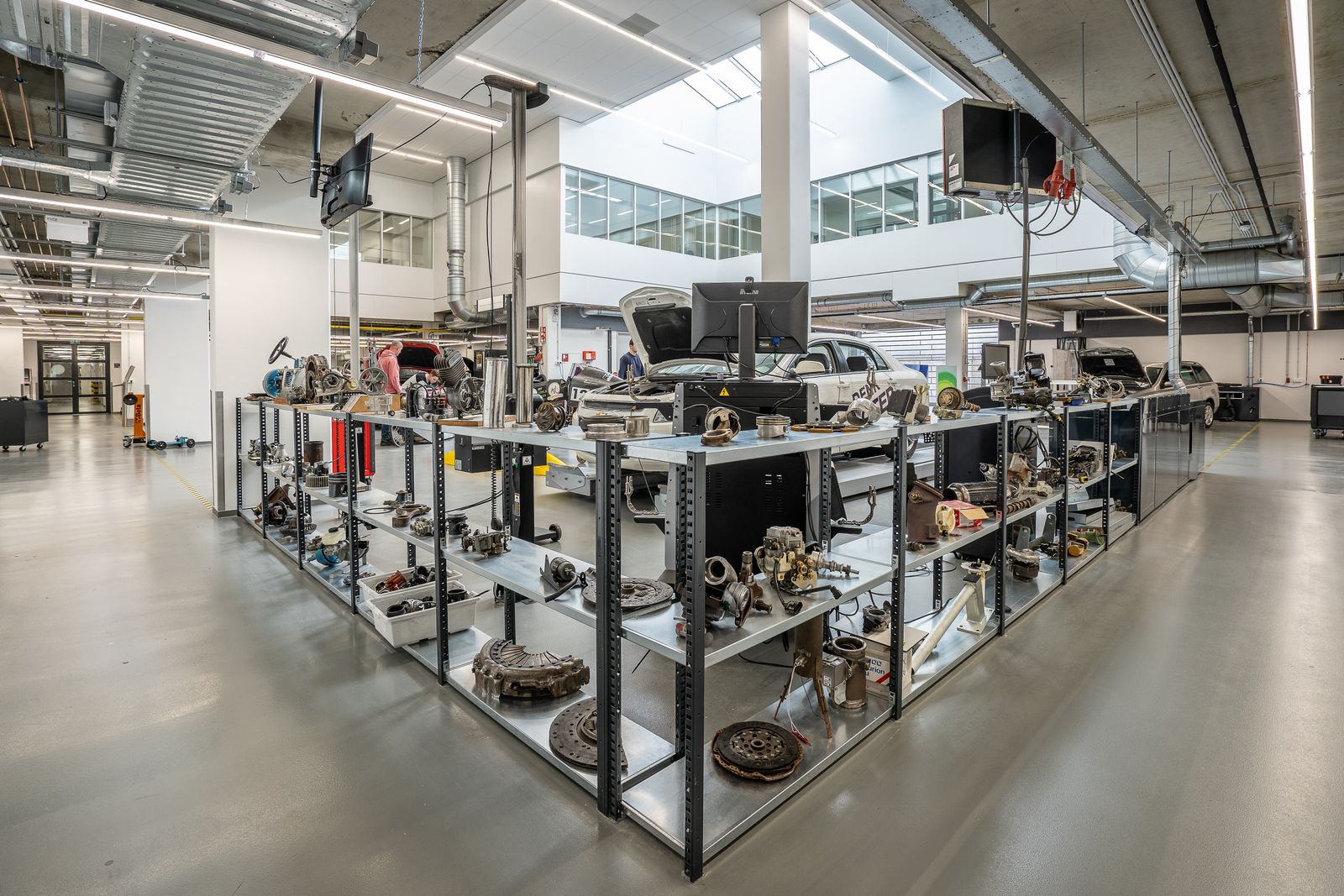
A pump goes down on a Friday evening. The planner opens the equipment in the EAM, clicks the BOM tab, and finds it empty. So the real work begins: the OEM manual is in a cabinet in the maintenance office, the spare parts list is an appendix somewhere in it, and the one fitter who overhauled this pump last time is on leave. The repair is a few hours of wrench time. Identifying the parts takes longer than fitting them.
Empty BOM tabs are one of the most ordinary facts of plant life, and one of the least discussed. Walk through a typical EAM at a plant that has operated for a couple of decades and you will find equipment with complete parts lists sitting next to equipment with nothing at all, with no pattern except who commissioned it and when. This piece is about why those gaps exist, what they quietly cost, and what building the missing BOMs actually involves.
A missing BOM is handover debt
Nobody deletes a bill of materials. The gap is created at the start of an equipment's life, at handover, when the spare parts information exists but never makes it into the system. The vendor delivered a spare parts list, an SPIR form, a manual with a parts appendix. The project team was closing out a hundred other things. Cataloguing spares is exactly the kind of work that loses the priority fight in the final weeks of a project, because its cost lands years later, on someone else's budget.
Then the debt compounds. The plant buys equipment across decades, from vendors with different documentation habits, through projects with different closeout discipline. Some BOMs get built during a reliability push and stop where the push stopped. The result is the patchwork every planner knows.
What the gap costs between breakdowns
The Friday-evening story is the dramatic version. The routine version is quieter: every planned job on BOM-less equipment starts with research instead of a pick list. Parts get ordered against a free-text description and arrive wrong. Stocking decisions run blind, because you cannot set a minimum stock level for a part you have never formally identified. And when a part is finally catalogued in a hurry, it often becomes a duplicate of a code that already existed, which is how one data gap feeds another.
The BOM already exists, on paper
Here is the useful reframe: for most equipment, the bill of materials is not missing. It is printed. The spare parts list in the IOM manual has item numbers, descriptions, and quantities. The GA drawing has the callouts that tell you where each item sits. The datasheet has the specifications that distinguish one seal from another. Building the BOM is not an act of invention; it is an act of reading, and then of matching what was read to the plant's material codes by maker part number and spec. Parts that have no code yet get flagged, because those are the ones that will stop a job someday.
This is why BOM building belongs to the same family as material master cleansing and enrichment. The evidence lives in the same vendor documents, and the join key is the same maker part number. A plant that builds BOMs without touching the catalogue, or cleanses the catalogue without building BOMs, does half the job twice.
Why it rarely gets done by hand
The work is not hard. It is voluminous, and it is dull in a very specific way: it needs someone who can read a GA drawing and a parts appendix correctly, and it offers that person hours of transcription per equipment. Plants have hundreds or thousands of equipment items. The people qualified to do the reading are the same people needed for everything else. Data build contractors will take the work on, and the good ones do it well, but the quality of a built BOM is exactly the quality of the reading behind it, and reading is where the hours go.
What changes when agents do the reading
This is the part that has genuinely moved in the last few years. Reading a vendor document, pulling each part with its specification and quantity, and carrying the page reference along is work AI agents now do well, and it is the work Raven does. Each equipment's BOM is proposed from its own documents, every line cites the page it came from, and the proposal is compared against whatever the EAM already holds, so existing BOMs get checked by the same pass that fills the empty ones. Your engineer reviews the differences rather than doing the transcription. The result goes back into SAP or Maximo as a file your team loads.
The page reference matters more than it looks. A BOM line that says where it came from can be verified in seconds and trusted for years. A BOM line with no source is just another free-text claim, one supersession away from being wrong.
Stop the gap at the door
For new equipment there is a cheaper fix than any cleanup: process the SPIR and spares documentation when the project hands it over, while the vendor is still answering emails. Handover is the one moment the parts information is complete, current, and in someone's contractual scope. Every year after that, the same information gets harder to assemble.
Where to start
Not with everything. Pull an equipment list and mark the critical items with an empty BOM tab; that count is your scope and your business case in one number. Build those first, from their own documents, with sources attached. The measure of success is simple, and it is the one the planner cares about: the next overhaul starts from a pick list, not a hunt.
About the author
Priyansh Srivastava is co-founder and CEO of Raven, backed by Y Combinator. Raven reads a plant's own documents, builds a verified model of the plant from them, and checks the material master, BOMs, and inventory against it.